 Viberate
Egg
 GBRRock, Progressive Rock, Psychedelic Rock
N/A monthly listeners
 GBRRock, Progressive Rock, Psychedelic Rock
In the late 1960s, the British progressive rock group Egg first gained popularity in the country. The ensemble, which featured Dave Stewart on keyboards, Mont Campbell on bass, and Clive Brooks on drums, was well-known for its complex arrangements and virtuoso playing. The blend of psychedelic rock, jazz, and classical music that characterised Egg's music was made possible by Stewart's intricate keyboard compositions and Campbell's explosive bass playing.
It is impossible to exaggerate Egg's significance for progressive rock. They broke the rules of rock music at the time with their unique fusion of various genres. Complex harmonies, sophisticated time signatures, and atypical song structure were all hallmarks of the band's songs. In addition to comedy and a lighthearted approach to their craft, Egg's music was distinctive from other progressive rock groups of the time. Egg was a group that, in essence, pushed the limits of rock music and made a lasting impression on it.
In the late 1960s, the British Progressive Rock group Egg built a name for itself in the music industry. Among their most well-known songs are "Fugue in D minor," "A Visit to Newport Hospital," "While Growing My Hair," and "The Song of McGillicudie the Pusillanimous." Audiences enjoyed the band's distinctive sound and experimental manner because they respected its uncommon approach to music.
The lively and upbeat song "They Laughed When I Sat Down At The Piano," one of Egg's most well-known tracks, demonstrates the band's aptitude for fusing several genres and styles. A bouncy piano melody is included in the song, and it is accompanied by a bass line that is in constant motion and intricate drumming. Another well-known song by the band is "Symphony No. 2," a four-movement composition with classical music influences.
Egg also produced the hit tunes "I Will Be Absorbed," "Boilk," and "Seven Is A Jolly Good Time." The band's ability to push the frontiers of rock music and experiment with various sounds and styles is demonstrated in each of these tracks. Egg made an impact on the Progressive Rock subgenre and are still adored today thanks to their distinctive musical style and willingness to take chances.
"The Civil Surface," the most recent album by the British progressive rock group Egg, was released in 1974. The quartet's distinctive fusion of jazz, rock, and classical elements is evident in each of the album's four tracks. The complicated compositions and spectacular performances on the album have received praise.
"Enneagram," one of the album's highlight songs, has sophisticated guitar playing and difficult time signatures. The song serves as a showcase for the group's technical prowess and avant-garde progressive rock style. Another standout tune is "A Visit to Newport Hospital," which uses discordant chords and unusual instrumentation to create a somber, almost frightening, mood.
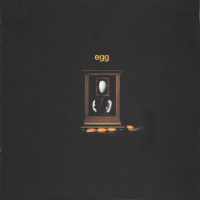
The band's 1970 self-titled first album, "Egg," features early experiments with jazz-influenced progressive rock. The CD includes songs like "Fugue in D Minor," which has complex contrapuntal melodies, and "The Song of McGillicudie the Pusillanimous," which shows the group's lighter side.
Egg's music is distinguished by its original approach to composition, technical difficulty, and distinctive fusion of jazz, rock, and classical influences. Progressive rock fans continue to adore their albums, and many current performers in the genre still draw inspiration from them.
The British progressive rock band Egg worked with other artists on a few noteworthy occasions. With TV On The Radio and Broken Social Scene, they worked on one of their most significant songs, "Afro." The song, which was included on a compilation CD in 2005, won praise from critics for its distinctive fusion of electronic and rock music.
In "Afro," TV On The Radio and Broken Social Scene's experimental and electronic sounds were combined with Egg's distinctive progressive rock sound. A song that stretched the boundaries of both genres and demonstrated the creative possibilities of partnerships was the end result. The tune quickly became a favorite on the album thanks to its catchy beat, complex production, and powerful vocals.
The British band Caravan and Egg worked together on another significant project. Dave Stewart, the keyboardist for Egg, was a founding member of Caravan, and the two groups frequently collaborated and shared musicians. The Canterbury scene was a progressive rock subgenre that evolved in the late 1960s and early 1970s as a result of the collaboration between Egg and Caravan.
To sum up, Egg's partnerships with TV On The Radio, Broken Social Scene, and Caravan were crucial to defining their sound and advancing the progressive rock subgenre. These partnerships showed how effective music is as a collaborative art form and how artists can work together to produce something original and cutting-edge.
Viberate is a professional music analytics service that provides a complete data overview of Egg, covering audience data, Spotify playlists and stats, individual track performance, and cross-platform metrics including Spotify, YouTube, streaming, and radio airplay analytics. The platform also includes full social media analytics across Instagram, TikTok, and Facebook, as well as insights from Apple Music playlists, SoundCloud, Beatport, Shazam, and Deezer, alongside artist charts, streaming charts, genre charts, and genre analytics to support A&R discovery, benchmarking, and strategic decision-making.
